
Immediate Legal Defense For Protection Orders
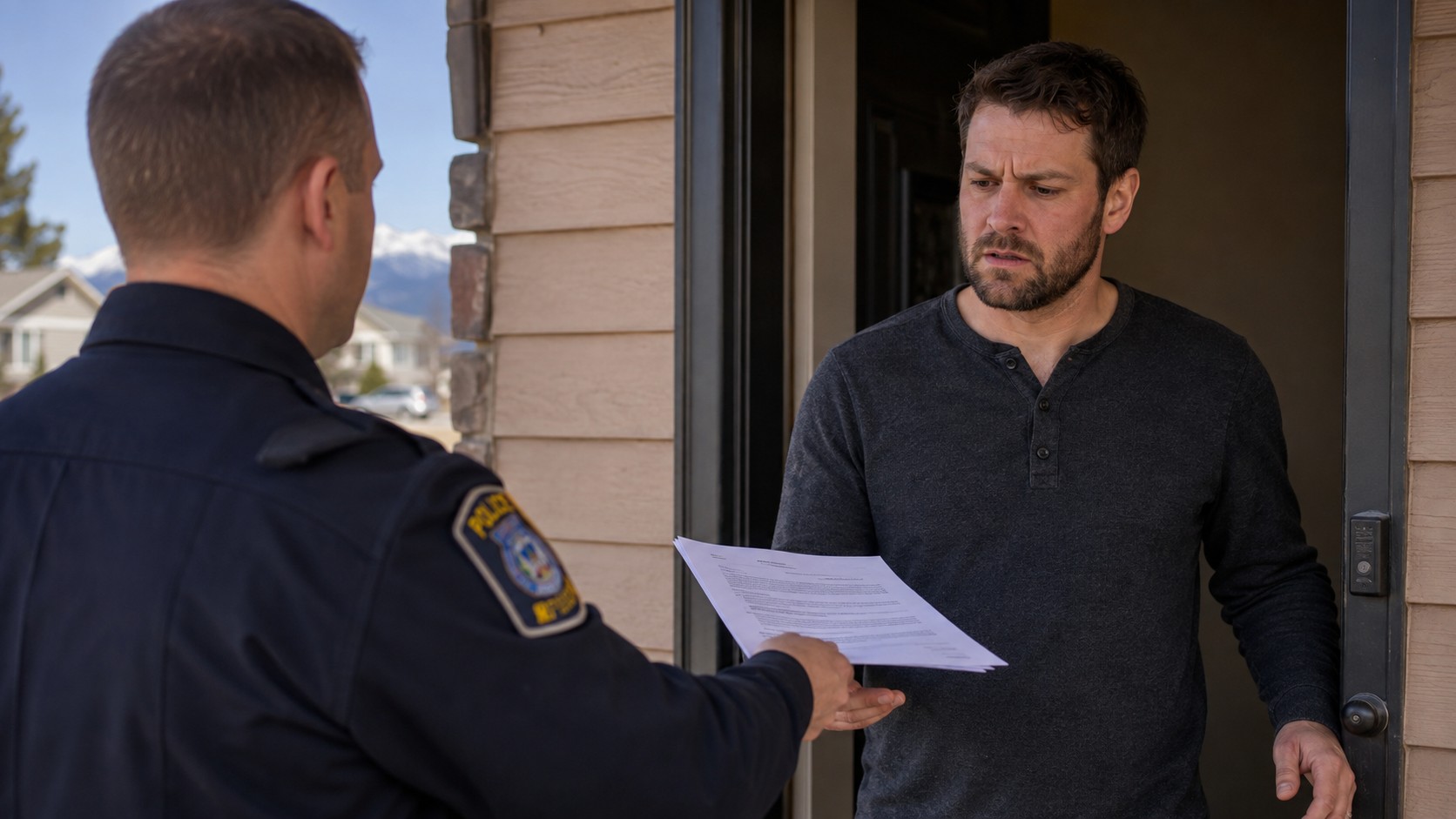
If you have just been personally served with a temporary protection order in Colorado Springs, the clock is already running. Under C.R.S. 13-14-104.5, the court must set your hearing no more than 14 days after the temporary order is issued. At that hearing a judge or magistrate can convert the temporary order into a permanent protection order, and a permanent civil protection order in Colorado has no expiration date.
The consequences reach far beyond the courtroom. A protection order can bar you from your own home, cut off contact with your children, and restrict where you can go. If the order includes a domestic violence finding, you can be ordered to surrender every firearm you own within days. The order is entered into a statewide registry that law enforcement can see, and it can surface in employment, housing, and security clearance screenings.
Colorado law uses the term "protection order." Many people still call it a restraining order or a no contact order, and the older forms still say "restraining order," but they all refer to the same thing under Colorado law.
Whether the allegations involve domestic violence, harassment, stalking, or threats, what you do in the next 14 days determines what happens for years afterward.
Call Colorado Springs Criminal Defense, LLC at (719) 578-3344 for a free consultation. Protect your rights before your hearing date.
Table of Contents
- Immediate Legal Defense When You Have Been Served
- Why Clients Choose Our Firm for Protection Order Defense
- Types of Protection Orders in Colorado
- How Protection Order Defense Works
- Areas We Serve
- Frequently Asked Questions
- Protect Your Future: Contact Us Now
- Sources
Why Clients Choose Our Firm for Protection Order Defense
Protection order cases are not paperwork. They are a fight for your home, your family, your career, and your constitutional rights, and they frequently overlap with criminal charges and family law matters. Attorney Aaron P. Gaddis approaches each case with all of those pieces in view.
A Colorado Springs native licensed since 2006. Aaron Gaddis graduated from the University of Denver Sturm College of Law in 2006, passed the bar that same year, and began his career with the Colorado State Public Defender's Office. He has practiced criminal defense in Colorado courts ever since, including more than four years handling the Fremont County prison jurisdiction out of Salida.
Civil and criminal cases handled together. A civil protection order hearing and a related criminal case affect each other. Testimony you give in the civil hearing can be used against you in the criminal case. We coordinate both so that nothing said in one courtroom damages you in the other, including any related domestic violence charges or assault charges.
Free consultations, reachable 24/7. When you have 14 days, you cannot wait for a callback. Aaron Gaddis is available around the clock, and your initial consultation is free.
A downtown office near the courthouse. Our office at 10 Boulder Crescent Street, Ste. 301 is a short walk from the El Paso County Judicial Building at 270 S. Tejon Street, where most Colorado Springs protection order hearings are held. We also appear regularly in Teller, Pueblo, and Fremont counties.
Collateral consequences taken seriously. A protection order can affect firearm rights, military service, security clearances, professional licenses, immigration status, and parenting time. Your defense strategy is built around the specific facts of your case and the specific consequences you face.
Types of Protection Orders in Colorado
Colorado has several kinds of protection orders, and each one works differently. Knowing which order you are facing is the first step in defending against it.
Temporary Civil Protection Orders
A temporary civil protection order, often called a TPO, is issued under C.R.S. 13-14-104.5. The hearing on the petitioner's request is usually ex parte, which means you are not present and have no chance to respond before the order is signed.
Since January 1, 2025, the standard for a temporary order is whether a "risk or threat of physical harm or the threat of psychological or emotional harm" exists to the person seeking protection. That is a lower bar than the "imminent danger" standard that applied before HB 24-1122 took effect, and it means temporary orders are granted more readily than they once were.
Once the temporary order is issued, the permanent order hearing must be set within 14 days. Each party may request one continuance of up to 14 days for good cause. If both parties agree, the court can continue the temporary order for up to one year. If the petitioner cannot serve you within the 14 days, the court extends the temporary order and resets the hearing.
If the temporary order excludes you from a shared residence, the statute allows you to return one time, accompanied by a peace officer, to collect the personal items you need to live normally until the hearing.
Permanent Civil Protection Orders
At the hearing, the petitioner must prove by a preponderance of the evidence that you committed acts constituting grounds for a protection order and that, unless restrained, you will continue to commit those acts or acts designed to intimidate or retaliate against the protected person. Those requirements come from C.R.S. 13-14-106, and the second element is where many protection order cases are won or lost. In cases based on sexual violence, the court instead asks whether a risk or threat of physical, psychological, or emotional harm still exists.
If the petitioner meets that burden, the court must make the order permanent or enter a permanent order with different terms. A permanent civil protection order does not expire on its own. It stays in force until a court modifies or dismisses it.
The court can also order you to pay the petitioner's filing fee, service of process fees, and other costs of bringing the case under C.R.S. 13-14-109.
We represent you at this hearing to pursue the best available outcome: denial of the permanent order, dismissal, or narrowing of the order's terms so you can keep your home, your job, and contact with your children.
Mandatory Criminal Protection Orders
If you are charged with any crime under Title 18, a mandatory protection order is entered against you at your first court appearance under C.R.S. 18-1-1001. It prohibits harassing, intimidating, retaliating against, or tampering with any witness or victim, and it lasts until the criminal case is finally resolved.
In domestic violence cases and cases involving crimes listed in the Victim Rights Act, the court can add stronger terms: a stay-away order for the alleged victim's home and workplace, a no-contact order, a firearms prohibition, and restrictions on alcohol. Since July 1, 2025, HB 25-1148 requires the court to review the criminal protection order at sentencing or whenever the case is otherwise resolved.
A criminal protection order and a civil protection order can exist at the same time for the same incident. One does not cancel the other.
Domestic Violence Protection Orders and Firearms
Under C.R.S. 13-14-105.5, if the court finds that a temporary or permanent civil protection order is based on an act of domestic violence that involved the use, attempted use, or threatened use of physical force, the court must order you to stop possessing or buying firearms and ammunition and to relinquish every firearm in your possession or control. The deadlines are short:
Relinquish within 24 hours if you were served in court, or within 48 hours if you were served outside court, not counting weekends and legal holidays.
File a sworn affidavit listing every firearm and where it went within 7 business days.
Appear at a compliance hearing set 8 to 12 business days after the order unless the court vacates it.
Missing any of those steps is itself a protection order violation under C.R.S. 18-6-803.5, and the court must issue a warrant for your arrest.
Federal law adds a second layer. Under 18 U.S.C. 922(g)(8), it is a federal felony to possess a firearm while subject to a protection order that was issued after a hearing you had notice of and an opportunity to attend, that protects an intimate partner or that partner's child, and that restrains you from harassing, stalking, or threatening them. The United States Supreme Court upheld that law in United States v. Rahimi in 2024. The federal ban does not apply to an ex parte temporary order, and it does not apply to orders protecting someone who is not an intimate partner under the federal definition.
For service members stationed at Fort Carson, Peterson and Schriever Space Force Bases, or the Air Force Academy, a protection order can end a career. Colorado also passed SB 26-085, effective August 12, 2026, which requires a court to consider the existence of any military protection order as evidence when deciding whether to issue a temporary civil protection order, and requires officers responding to a domestic violence call to check whether a military protection order exists.
Modification and Dismissal
Already living under a permanent protection order? You can ask the court to modify or dismiss it, but C.R.S. 13-14-108 sets strict conditions:
You must wait at least two years after the permanent order was issued, or two years after the court ruled on your last motion to modify or dismiss.
You must complete a fingerprint-based criminal history check through the Colorado Bureau of Investigation and the FBI within 90 days before filing, at your own expense. The court will not consider your motion without it.
You must personally serve the protected person with the motion and the hearing notice.
You carry the burden of proving, by a preponderance of the evidence, that modification is appropriate or that the order is no longer necessary.
The court weighs factors such as your compliance with the order, completion of any treatment program, the time that has passed, whether other protection orders have been issued against you, and how close the parties live and work. If you were convicted of any misdemeanor or felony against the protected person after the order was issued, the order stays permanent and cannot be modified on your motion at all.
The protected person, by contrast, can ask the court to modify or dismiss the order at any time. When the other side is willing to see the order lifted, that route is often the fastest.
How Protection Order Defense Works
Step 1: Immediate Consultation and Review
Call us for a free consultation. We review the complaint and temporary order you were served, assess the strength of the case against you, and explain your rights. If a criminal case is pending or possible, we explain how your Fifth Amendment rights interact with the civil hearing, because anything you say under oath there can be used by prosecutors.
Step 2: Prepare Your Defense Strategy
We gather text messages, emails, call logs, and social media records, identify and interview witnesses, and review any police reports or documents the petitioner filed. We build a defense aimed at the legal standard the petitioner has to meet. We also advise you on what to avoid, including any contact with the protected party, even through friends or family, and any public posts about the case.
Step 3: Court Representation and Follow-Up
We appear with you at the El Paso County Judicial Building or the court handling your case, cross-examine the petitioner, present your evidence, and argue the law. If the court enters a permanent order anyway, we discuss your options, including appeal, a future motion to modify or dismiss, and pre-trial strategy for any related criminal proceedings.
Areas We Serve
Aaron Gaddis represents protection order respondents throughout El Paso, Teller, Pueblo, and Fremont counties, including:
Downtown Colorado Springs, Old Colorado City, and Manitou Springs
Briargate, Northgate, Black Forest, Falcon, and Monument
Cimarron Hills, Security-Widefield, and Fountain
Fort Carson, Peterson Space Force Base, and Schriever Space Force Base
Woodland Park, Cripple Creek, and Teller County
Pueblo and Pueblo County
Cañon City, Florence, and Fremont County
Protection order hearings for Colorado Springs and El Paso County are held at the El Paso County Judicial Building, 270 S. Tejon Street. We also appear at the Teller County Combined Courts in Cripple Creek, the Pueblo County Combined Courts, and the Fremont County Combined Courts in Cañon City.
Frequently Asked Questions
What happens if I ignore a protection order served on me?
Do not. If you were properly served and fail to appear at the hearing, C.R.S. 13-14-106 requires the court to enter a permanent protection order by default, without any further evidence, and the court may issue a bench warrant for your arrest. Violating any protection order is a separate crime under C.R.S. 18-6-803.5. It is a class 2 misdemeanor, punishable by up to 120 days in jail and a $750 fine, and it becomes a class 1 misdemeanor, punishable by up to 364 days and a $1,000 fine, if the parties were in an intimate relationship, the order was based on a stalking allegation, the order was a criminal protection order, or you have a prior violation. Officers who find probable cause of a violation are generally required to arrest.
How much does protection order defense cost?
Your initial consultation is free. Attorney fees depend on the complexity of the case, and we give you a clear picture during that consultation. On the court side, the petitioner pays a filing fee of $97 to open a civil protection order case in county court unless the case is based on domestic violence, stalking, or sexual violence, in which case no filing fee is charged. If a permanent order is entered, the court can order the respondent to reimburse the petitioner's filing fee, service costs, and other costs of the case.
Can a protection order affect my job or military service?
Yes. A domestic violence protection order can trigger mandatory firearm relinquishment under Colorado law, and a permanent order protecting an intimate partner triggers the federal firearm ban under 18 U.S.C. 922(g)(8). Either one can disqualify law enforcement officers, service members, and anyone whose job requires a weapon or a security clearance. Protection orders also appear in Colorado court records and the statewide protection order registry, and they can surface in background screenings for employment and housing. For active-duty personnel, a protection order can lead to administrative separation. We work with clients to address these consequences as part of the defense, not as an afterthought.
How long do I have to respond to a protection order?
Your hearing must be set within 14 days of the temporary order. Your court date, time, and location are printed on the citation you were served. That 14-day window is your opportunity to gather evidence, line up witnesses, and prepare, so contact a lawyer as soon as you are served.
Can I go back to my home to get my belongings?
If the temporary order excludes you from a residence you shared with the petitioner, C.R.S. 13-14-104.5 allows you to return one time, accompanied by a peace officer, to collect undisputed personal items you need to get by until the hearing. Going back without an officer, even for a minute, is a violation.
Does a civil protection order go on my criminal record?
A civil protection order is not a criminal conviction, so it does not create a criminal record by itself. It is a public court record, and it is entered into Colorado's central registry of protection orders and the national database used by law enforcement. A violation of the order, however, is a criminal charge that can result in a conviction on your record.
Can a permanent protection order be modified later?
Yes, but only under the conditions in C.R.S. 13-14-108. You must wait two years from the date the permanent order was entered, or two years from the ruling on your last motion, complete a fingerprint-based background check within 90 days before filing, and prove the order is no longer necessary. If you were convicted of any offense against the protected person after the order was entered, you cannot have it modified or dismissed on your own motion. An attorney can tell you whether you qualify and handle the filing and hearing.
Protect Your Future: Contact Us Now
Time is not on your side. If you have been served with a temporary protection order, a criminal protection order, or any court order restricting your freedom in Colorado Springs, Pueblo, Cañon City, or Woodland Park, you need a defense attorney who can move within the 14-day window. Every day without legal help is a day closer to a permanent order that is very hard to undo.
Colorado Springs Criminal Defense, LLC
Call now for a free consultation: (719) 578-3344
10 Boulder Crescent Street, Ste. 301, Colorado Springs, CO 80903

Sources
C.R.S. 13-14-104.5, Procedure for Temporary Civil Protection Order. law.justia.com
C.R.S. 13-14-105.5, Civil Protection Orders: Prohibition on Possessing or Purchasing a Firearm. law.justia.com
C.R.S. 13-14-106, Procedure for Permanent Civil Protection Orders. law.justia.com
C.R.S. 13-14-108, Modification and Termination of Civil Protection Orders. law.justia.com
C.R.S. 13-14-109, Fees and Costs. law.justia.com
C.R.S. 18-1-1001, Protection Order Against Defendant. law.justia.com
C.R.S. 18-6-803.5, Crime of Violation of a Protection Order. law.justia.com
HB 24-1122, Protection Orders for Victims of Crimes (effective January 1, 2025). leg.colorado.gov
HB 25-1148, Criminal Protection Order and Protection Order Violation (effective July 1, 2025). leg.colorado.gov
SB 26-085, Military Protection Orders (effective August 12, 2026). leg.colorado.gov
Colorado Judicial Branch, Civil Protection Orders information sheet (October 2025). coloradojudicial.gov
Colorado Judicial Branch, El Paso County Judicial Building. coloradojudicial.gov
18 U.S.C. 922(g)(8), federal firearm prohibition for persons subject to certain protection orders. uscode.house.gov
