Facing White Collar Crime Charges in Colorado Springs?
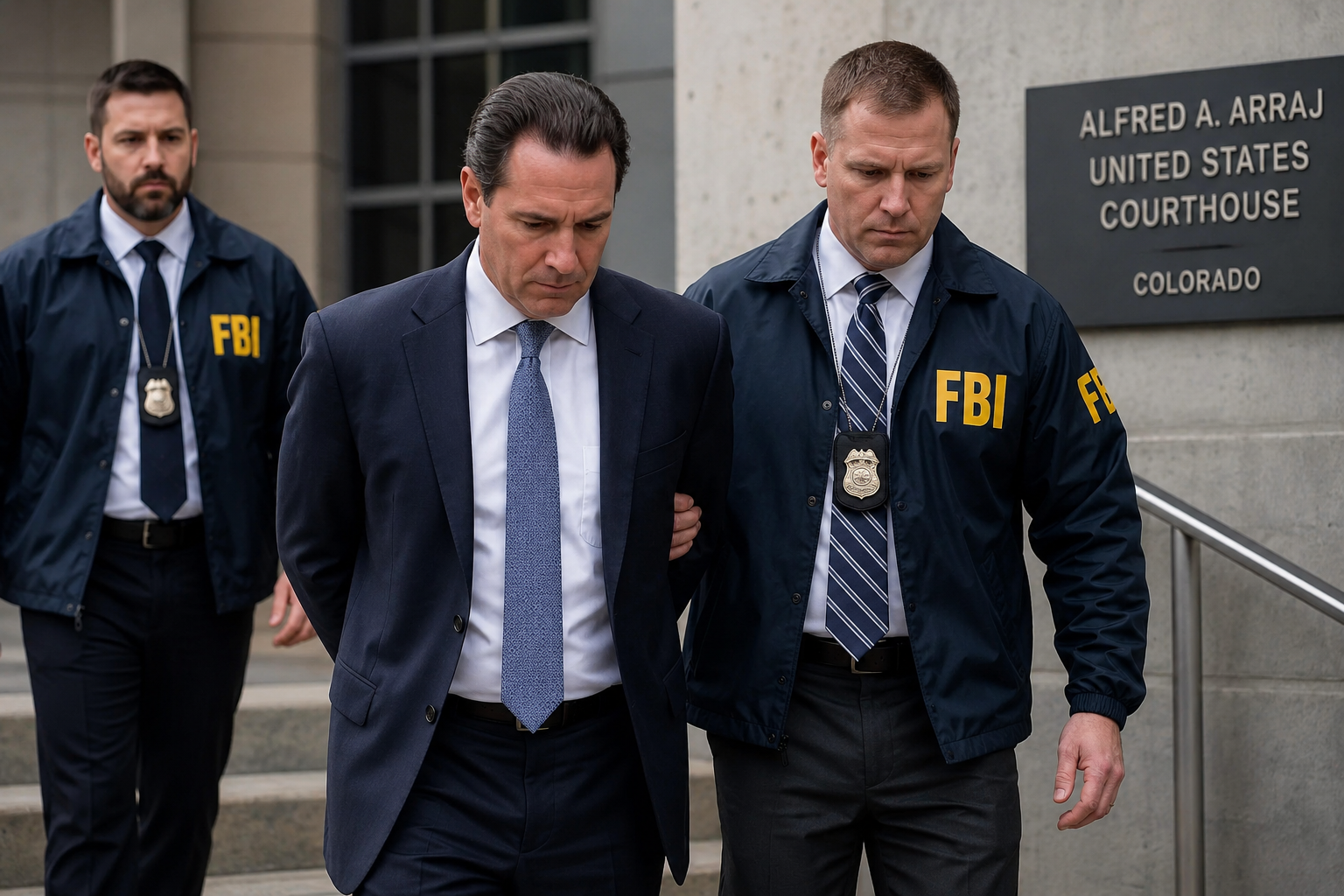
If you are under investigation or facing charges for fraud, embezzlement, tax evasion, money laundering, or another financial offense in Colorado Springs, the most dangerous period is often the one before charges are filed. White collar investigations can run for months or years, and prosecutors build their case during that window. Statements you make to a detective, an IRS agent, or an FBI agent during that time become evidence.
Attorney Aaron P. Gaddis of Colorado Springs Criminal Defense, LLC has practiced criminal law in Colorado since 2006, first with the Colorado State Public Defender's Office and now in private practice. He defends business owners, professionals, and individuals across El Paso, Teller, Pueblo, and Fremont Counties who are accused of financial crimes under Colorado law and who face federal exposure.
A conviction can mean prison, restitution, fines that run into six figures, and the loss of a professional license. Getting a lawyer involved early does not guarantee that charges will never be filed, but it does mean someone is protecting your rights from the first contact with investigators. Call (719) 578-3344 for a free, no-obligation consultation. Same-day appointments are available.
On This Page
- Why Colorado Springs Professionals Turn to Aaron P. Gaddis
- What Counts as a White Collar Crime in Colorado
- State vs. Federal Prosecution: Where Your Case Will Be Heard
- Our White Collar Crime Defense Services
- How Our Defense Process Works
- Recent Federal White Collar Prosecutions in Southern Colorado
- Areas We Serve
- Frequently Asked Questions
- Talk to a Colorado Springs White Collar Crime Lawyer
- Sources
Why Colorado Springs Professionals Turn to Aaron P. Gaddis
Two decades of criminal defense practice. Aaron graduated from the University of Denver Sturm College of Law in 2006, passed the bar, and went straight to work for the Colorado State Public Defender's Office. He has handled cases ranging from homicide to DUI, with contested hearings and trials throughout.
A Colorado Springs native who knows the local courts. Aaron grew up here. After public defender assignments in Silverthorne and Salida, including more than four years working the prison jurisdiction in Cañon City, he returned home to open his own practice.
You work directly with your attorney. This is not a high-volume firm. You will talk to Aaron, not a case manager, and he is reachable 24/7 when something urgent comes up.
Free consultations with a real assessment. Consultations are free and carry no obligation. You leave with a clear picture of what you are facing and what your options are.
What Counts as a White Collar Crime in Colorado
"White collar crime" is not a legal term in Colorado. It is a label for non-violent offenses committed through deception for financial gain. Colorado prosecutes most of these under a handful of statutes, and the penalty usually scales with the dollar amount involved.
Colorado has no general embezzlement statute. When an employee, bookkeeper, or trustee is accused of taking money entrusted to them, the charge is theft under C.R.S. 18-4-401. The one exception is C.R.S. 18-8-407, embezzlement of public property, which applies only to public servants and is a class 5 felony.
Colorado Theft Penalties by Dollar Amount
For offenses committed on or after March 1, 2022, theft is classified as follows:
| Value Involved | Offense Level | Presumptive Sentence |
|---|---|---|
| Under $300 | Petty offense | Up to 10 days in jail and/or $300 fine |
| $300 to $999 | Class 2 misdemeanor | Up to 120 days in jail and/or $750 fine |
| $1,000 to $1,999 | Class 1 misdemeanor | Up to 364 days in jail and/or $1,000 fine |
| $2,000 to $4,999 | Class 6 felony | 1 year to 18 months in prison; $1,000 to $100,000 fine |
| $5,000 to $19,999 | Class 5 felony | 1 to 3 years in prison; $1,000 to $100,000 fine |
| $20,000 to $99,999 | Class 4 felony | 2 to 6 years in prison; $2,000 to $500,000 fine |
| $100,000 to $999,999 | Class 3 felony | 4 to 12 years in prison; $3,000 to $750,000 fine |
| $1,000,000 or more | Class 2 felony | 8 to 24 years in prison; $5,000 to $1,000,000 fine |
Felony ranges come from C.R.S. 18-1.3-401. Those are presumptive ranges. If the court finds extraordinary aggravating circumstances, it can sentence up to twice the maximum, so a class 2 felony theft can carry as much as 48 years. Every felony prison sentence also carries a mandatory parole period afterward.
Two features of the theft statute matter enormously in white collar cases. First, under 18-4-401(4), separate thefts committed within six months, or thefts against the same victim as part of one scheme, can be aggregated into a single count. A series of $1,500 transactions that would each be a misdemeanor can be charged together as a single felony. Second, the value threshold is measured by what was taken, not what was gained, so restitution and offense level are argued separately.
Other Colorado Statutes Used in White Collar Cases
Forgery, C.R.S. 18-5-102: falsely making, completing, or altering a contract, deed, check, or public record with intent to defraud. Class 5 felony. Forgery has no statute of limitations in Colorado.
Identity theft, C.R.S. 18-5-902: using another person's identifying or financial information to obtain anything of value. Class 4 felony.
Money laundering, C.R.S. 18-5-309: conducting a financial transaction with what you know or believe to be criminal proceeds, in order to conceal the source or avoid a reporting requirement. Class 3 felony.
Securities fraud, C.R.S. 11-51-603: willful fraud in connection with the offer or sale of a security is a class 3 felony, prosecuted by the Attorney General or the district attorney.
Insurance fraud, criminal impersonation, and offering a false instrument for recording round out the most common charges. Each is a felony, and the statute of limitations for each runs from the date the crime is discovered, not the date it was committed.
State vs. Federal Prosecution: Where Your Case Will Be Heard
The same conduct can be charged by the state, by the federal government, or both. Federal prosecutors tend to take cases that cross state lines, involve federally insured banks, defraud a federal program, or involve federal taxes. The FBI, IRS Criminal Investigation, the SEC, and the Small Business Administration's inspector general are frequent investigating agencies.
State Court
Colorado charges are filed by the District Attorney and heard in the county where the offense occurred. For our clients that usually means the El Paso County Combined Courts at 270 S. Tejon Street in Colorado Springs (4th Judicial District), the Teller County Combined Courts in Cripple Creek, the Pueblo County Combined Courts (10th Judicial District), or the Fremont County Combined Courts in Cañon City (11th Judicial District).
Federal Court
Federal cases from Colorado Springs are heard in Denver at the U.S. District Court for the District of Colorado. The most common federal white collar statutes carry these maximum penalties:
Wire fraud and mail fraud (18 U.S.C. 1343 and 1341): up to 20 years per count, or 30 years if the scheme affected a financial institution or involved federal disaster relief.
Bank fraud (18 U.S.C. 1344): up to 30 years and a $1,000,000 fine.
Money laundering (18 U.S.C. 1956): up to 20 years and a fine of $500,000 or twice the value of the property laundered, whichever is greater.
Tax evasion (26 U.S.C. 7201): up to 5 years and a $100,000 fine for individuals, plus the cost of prosecution.
Federal sentences are driven by the U.S. Sentencing Guidelines, where the loss amount is the single biggest factor. In fiscal year 2024, the District of Colorado sentenced 25 people for fraud, theft, or embezzlement. Eighteen of them went to prison, and the average sentence was 24 months. The 16 people sentenced for money laundering averaged 89 months. Four of the 25 fraud defendants took their cases to trial, a rate more than four times the national average for that offense type.
Our White Collar Crime Defense Services
Fraud Defense
Wire fraud, mail fraud, bank fraud, credit card fraud, insurance fraud, and COVID relief fraud are the offenses we see most often. Under Colorado law most of these are charged as theft by deception. In federal court they are charged under the fraud statutes above, which do not require the government to prove that anyone actually lost money. A scheme to defraud, intent to defraud, and a single interstate wire or mailing in furtherance of it are enough.
That makes intent the battleground. The prosecution has to prove you knew a representation was false and made it to deceive. Business disputes, accounting errors, aggressive but legal sales practices, and reliance on an accountant or attorney are not fraud. We go through the government's evidence looking for the gap between what happened and what the indictment says you meant.
Embezzlement and Theft
Embezzlement cases are built on paper: bank records, QuickBooks exports, payroll files, and expense reports. The government's forensic accountant will have a theory of how much was taken and when. We retain our own to test that theory, because the dollar figure controls the offense level and the restitution order, and because the aggregation rule lets prosecutors bundle transactions that may not belong together.
For licensed professionals, the criminal case is only half the problem. Doctors, nurses, real estate brokers, CPAs, insurance producers, and securities representatives all answer to a licensing board, and a plea to a crime involving dishonesty can end a career even when the sentence is probation. We negotiate with the licensing consequences in view, not as an afterthought.
Tax Evasion and IRS Investigations
Colorado prosecutes willful state tax evasion, and the IRS Criminal Investigation division refers federal cases to the U.S. Attorney. The key word in both is willful. Owing money is not a crime. Making a mistake is not a crime. The government has to prove you knew what the law required and deliberately set out to evade it.
Business owners and self-employed professionals are the usual targets. We work with forensic accountants to challenge the government's numbers, identify legitimate deductions and reporting errors, and, where it makes sense, resolve the case through the civil process rather than a criminal prosecution.
Money Laundering and Related Charges
Money laundering is usually charged alongside another offense, and it can carry a heavier sentence than the underlying crime. Both the Colorado statute and the federal statute require the prosecution to prove that you knew the money was criminal proceeds and that the transaction was designed to conceal it. Ordinary banking with money that later turns out to be tainted is not money laundering. Tracing transactions and separating knowledge from mere involvement is where these cases are won.
How Our Defense Process Works
White collar cases are not resolved in a single hearing. Discovery can run to tens of thousands of pages of financial records, emails, and bank statements, and the discovery process alone can take months. Here is what to expect.
Step 1: Assessment and Protection of Your Rights
At your free consultation we go through what you have been accused of, or what you think you might be accused of, who has contacted you, and what you have already said. If an investigation is active, we contact the agency so that all further communication goes through counsel. You do not talk to investigators again without your lawyer present.
Step 2: A Defense Built on the Records
We review the financial records, the communications, and the prosecution's theory line by line, and we bring in forensic accountants and other experts when the case turns on accounting, valuation, or tax questions. We also look hard at how the evidence was gathered: search warrants, subpoenas, and interviews are all open to constitutional challenge. Where an employer is running its own internal investigation, we manage your involvement in it so that it does not become the prosecution's roadmap.
Step 3: Resolution on Your Terms
Some cases end in a declination, where prosecutors decide not to file. Some end in a negotiated plea to a reduced charge with an agreed sentence and restitution figure. Some go to trial. We tell you honestly which path the evidence supports, and we do not push anyone to plead guilty to a charge the evidence does not prove. If a conviction has already happened, we handle appeals and sentence modification motions as well.
Recent Federal White Collar Prosecutions in Southern Colorado
Two recent District of Colorado cases show what federal exposure looks like when a scheme is large or the facts are aggravated.
In the Mediatrix Capital foreign-exchange fraud, two executives were convicted at trial in May 2024 of 14 counts of wire fraud and one count of conspiracy after promising investors more than $179 million in returns that did not exist. One was sentenced in November 2024 to 23 years in prison; the other was sentenced in June 2026 to 24 years and ordered to pay $93.27 million in restitution. A third partner, who kept an office in the Colorado Springs area, pleaded guilty to a lesser charge and received one year.
Closer to home, the owners of Return to Nature Funeral Home in Colorado Springs and Penrose pleaded guilty to conspiracy to commit wire fraud after taking more than $130,000 from families for services never performed and obtaining $882,300 in fraudulent COVID relief loans. Jon Hallford was sentenced in June 2025 to 20 years in federal prison, the statutory maximum. Carie Hallford was sentenced in March 2026 to 18 years. Both were ordered to pay more than $1.07 million in restitution, and both faced separate state charges in El Paso County.
These were not our cases, and most white collar prosecutions in Colorado look nothing like them. They are here because they illustrate two points: federal judges will go to the top of the guideline range when the conduct is egregious, and the same facts can be charged in state and federal court at the same time.
Areas We Serve
We defend white collar cases across southern Colorado:
Colorado Springs neighborhoods: Downtown, Old Colorado City, Broadmoor, Briargate, Cheyenne Mountain, and Northgate
El Paso County: Fountain, Security-Widefield, Monument, Falcon, and Manitou Springs
Surrounding counties: Teller County (Woodland Park, Cripple Creek), Pueblo County, and Fremont County (Cañon City, Florence, Penrose)
Military communities: Fort Carson, Peterson Space Force Base, Schriever Space Force Base, and the U.S. Air Force Academy
Government contractors and service members face added complications. Contractors can be debarred, and service members can face command action under the UCMJ alongside a civilian prosecution. If you hold a security clearance, a fraud allegation puts it at risk before any conviction. Tell us at the consultation so we can plan for it.
Frequently Asked Questions
Should I Talk to Investigators Before Hiring a Lawyer?
No. Anything you say to a detective, an IRS agent, or an FBI agent can be used against you, and the interview is often the government's best evidence in a white collar case. Investigators are trained to sound friendly and to suggest that cooperating now will make things easier. Tell them you want to speak with an attorney, then call us.
Can You Help If I Am Under Investigation but Not Charged?
Yes, and this is the best time to call. During the pre-charge phase we can find out what the government is looking at, control your communications with investigators, gather the records that support your side, and, in some cases, present information to the prosecutor that leads to a decision not to file. That is not possible in every case, but it is never possible once you have already given a statement.
How Long Does the State Have to File Charges?
Under C.R.S. 16-5-401, most Colorado felonies must be charged within three years. White collar cases are different. For theft, identity theft, securities fraud, insurance fraud, and criminal impersonation, the three years do not start until the crime is discovered. Forgery has no time limit at all. Embezzlement of public property and state tax evasion get an extra three years. Federal fraud charges generally have a five-year limit, extended to ten years for bank fraud and for wire or mail fraud affecting a financial institution, and six years for tax evasion.
How Much Does a White Collar Crime Lawyer Cost in Colorado Springs?
It depends on the volume of records, whether the case is in state or federal court, and whether forensic accountants or other experts are needed. We discuss fees at the free consultation and put the arrangement in writing before you commit. Weighed against a felony record, restitution, and the loss of a license or clearance, the cost of a real defense is the smaller number.
Will a White Collar Conviction End My Professional Career?
It can. Colorado's Division of Professions and Occupations regulates more than 60 credential types, from nursing and medicine to real estate and accounting, and most boards treat a conviction involving dishonesty as grounds for discipline up to revocation. Attorneys answer to the Colorado Supreme Court's Office of Attorney Regulation Counsel, and securities professionals to FINRA and the Division of Securities. Protecting your license is part of the defense strategy from day one.
Talk to a Colorado Springs White Collar Crime Lawyer Today
White collar investigations do not pause while you decide what to do. Records are being subpoenaed, witnesses are being interviewed, and every conversation you have without counsel adds to the file. Call Colorado Springs Criminal Defense, LLC at (719) 578-3344 for a free, no-obligation consultation with Attorney Aaron P. Gaddis. Same-day appointments are available, and Aaron can be reached around the clock for urgent matters.
Colorado Springs Criminal Defense, LLC
10 Boulder Crescent Street, Ste. 301
Colorado Springs, CO 80903
Phone: (719) 578-3344
Fax: (719) 960-2640
Learn more about Attorney Gaddis, or read about how felony charges work in Colorado.

Sources
- C.R.S. 18-4-401, Theft
- C.R.S. 18-1.3-401, Felonies Classified, Presumptive Penalties
- C.R.S. 18-5-102, Forgery
- C.R.S. 18-5-309, Money Laundering
- C.R.S. 18-5-902, Identity Theft
- C.R.S. 18-8-407, Embezzlement of Public Property
- C.R.S. 11-51-603, Colorado Securities Act Criminal Penalties
- C.R.S. 16-5-401, Limitation for Commencing Criminal Proceedings
- 18 U.S.C. 1341, 1343, 1344, 1956, 3282, 3293; 26 U.S.C. 6531, 7201
- U.S. Sentencing Commission, Statistical Information Packet, Fiscal Year 2024, District of Colorado
- U.S. Attorney's Office, District of Colorado: Former Trading Firm Executive Sentenced to 23 Years (Nov. 2024)
- FBI Denver: Second Former Trading Firm Executive Sentenced to 24 Years (Jul. 2026)
- U.S. Attorney's Office, District of Colorado: Colorado Springs Funeral Home Operator Sentenced (Jun. 2025)
- U.S. Attorney's Office, District of Colorado: Second Funeral Home Operator Sentenced to 18 Years (Mar. 2026)
- Colorado Department of Regulatory Agencies, Division of Professions and Occupations
